Future Electro
SX1278 LoRa Module Ra- 02 433MHZ Wireless Spread Spectrum Transmission
SX1278 LoRa Module Ra- 02 433MHZ Wireless Spread Spectrum Transmission
Regular price
Rs. 599.00
Regular price
Rs. 799.00
Sale price
Rs. 599.00
Shipping calculated at checkout.
Quantity
Couldn't load pickup availability
 Order On WhatsApp


Checkout safely using your preferred payment method


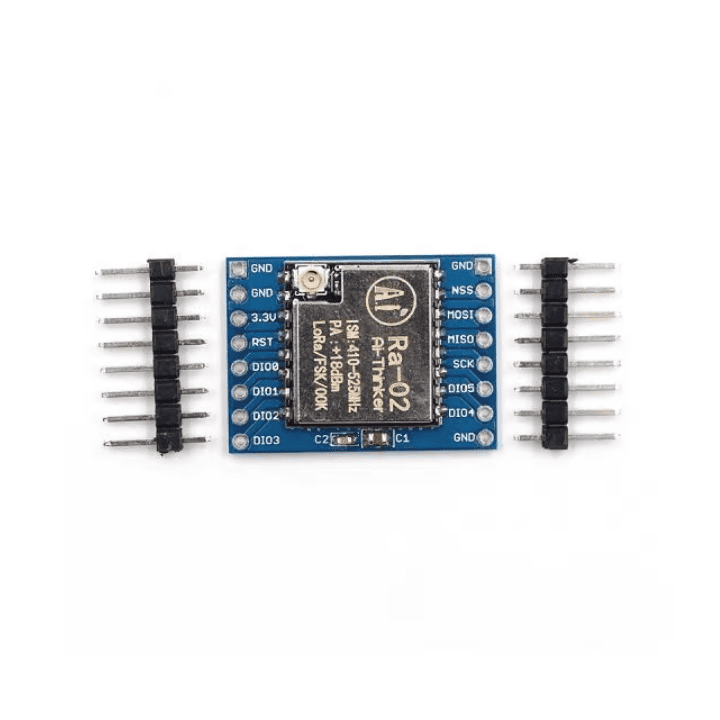
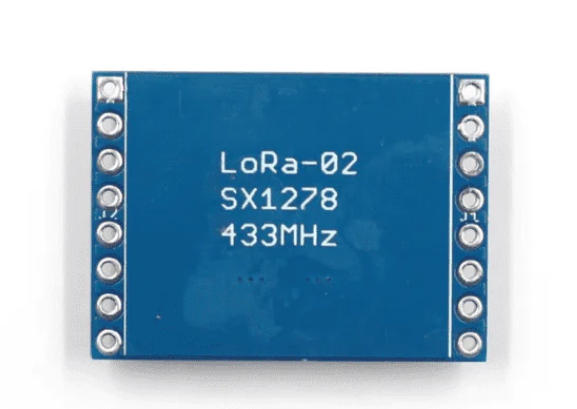
The long-range wireless transmission LoRa module Ra-02 is based on the SEMTECH SX1278 wireless transceiver. This LoRa module uses advanced LoRa spread spectrum technology to provide a communication range of up to 10,000 meters. It has excellent anti-jamming skills and an air wake-up consumption feature.
The SX1278 LoRa RF module is designed mainly for long-range spread spectrum communication and has low current consumption. It has a high sensitivity of -148 dBm and a power output of +20 dBm.
Compared to traditional modulation technology, LoRa communication modulation technology provides significant advantages in terms of anti-blocking and selection, interference, and power consumption.
Features
- LoRa ™ Spread Spectrum modulation technology
- Constant RF power output at + 20dBm-100mW voltage change
- Half-duplex SPI communication
- Supports FSK, GFSK, MSK, GMSK, LoRa ™ and OOK modulation modes
- Automatic RF signal detection, CAD mode and very high speed AFC
- Packet engine with CRC up to 256 bytes
- Small footprint dual-row stamp-hole patch package
- Shielded housing
- Spring Antenna
Applications:
- Long-range wireless communication module based on LoRa platform
- Uses SPI communication protocol and requires an antenna for proper RF communication
- Operates on 3.3V and has 16 pins (8 on each side)
- Can be interfaced with microcontrollers like Arduino Uno and Nano
- Widely used in Arduino & IoT projects, smart agriculture, smart cities, and industrial automation due to its long-range communication and low power consumption
SX1278 LoRa Module (RA-02 433MHz) – Arduino Connection & Wiring Guide
1. Important Notes Before Wiring
- The SX1278 module operates at 3.3V logic and supply; it is not 5V tolerant. Supplying 5V may damage the module.
- Connect a suitable antenna to the module’s RF output to prevent damage and ensure proper communication.
- Ensure a common ground between Arduino and LoRa module to avoid unreliable communication.
2. Wiring Table (Arduino UNO Example)
| LoRa Module Pin | Arduino UNO Pin | Notes |
|---|---|---|
| VCC (3.3V) | 3.3V | Provide stable 3.3V supply. Some boards may require external regulator. |
| GND | GND | Common reference for both devices. |
| NSS / CS | D10 | Chip select for SPI communication. |
| DIO0 | D2 | Interrupt pin for packet-ready signaling. |
| SCK | D13 | SPI clock. |
| MISO | D12 | SPI Master-In-Slave-Out. |
| MOSI | D11 | SPI Master-Out-Slave-In. |
| RST | D9 | Reset pin for LoRa module. |
3. Connection Tips
- Use short wires to reduce noise on SPI lines.
- Keep the LoRa module away from large metal objects or other RF modules to reduce interference.
- If using a 5V Arduino, consider a logic-level shifter on SPI lines to protect the module.
- Ensure VCC is supplied by a 3.3V source capable of sufficient current.
4. Arduino IDE Setup & Example Code
- Install the LoRa library by Sandeep Mistry via Arduino Library Manager.
- Use the following basic transmitter code:
#include <SPI.h>
#include <LoRa.h>

int counter = 0;

void setup() {
  Serial.begin(9600);
  while (!Serial);

  Serial.println("LoRa Sender");
  if (!LoRa.begin(433E6)) {
    Serial.println("Starting LoRa failed!");
    while (1);
  }
  LoRa.setTxPower(20);
}

void loop() {
  Serial.print("Sending packet: ");
  Serial.println(counter);

  LoRa.beginPacket();
  LoRa.print("hello ");
  LoRa.print(counter);
  LoRa.endPacket();

  counter++;
  delay(5000);
}
- For the receiver, use
LoRa.begin(433E6)and read incoming packets.
5. Final Checklist
- Antenna connected
- Module VCC = 3.3V and GND connected
- SPI wiring correct (NSS, SCK, MISO, MOSI)
- DIO0 and RST connected
- Logic levels safe or level shifted
- Library installed and example configured for 433MHz
LoRa Module Comparison: SX1278 vs SX1262 vs RFM95
| Feature | SX1278 Module | SX1262 Module | RFM95 Module |
|---|---|---|---|
| Frequency Range | ~137‑525 MHz (commonly 433/470 MHz) | ~150‑960 MHz (broad frequency support) | Typically 868/915 MHz (depends on variant) |
| Maximum Transmit Power | Up to +20 dBm | Up to +22 dBm | Up to +20 dBm (varies with module) |
| Receiver Sensitivity | Down to ~‑139 dBm | Down to ~‑148 dBm | ~‑148 dBm (depending on version) |
| Power Consumption / Efficiency | Higher RX current, less efficient | Much improved efficiency, lower RX current | Good efficiency, similar to SX127x series |
| Package / Size | Larger 6×6 mm QFN, older design | Smaller 4×4 mm QFN, newer generation | Module size similar to SX127x based modules |
| Ideal Use Case | Cost-sensitive, 433 MHz or legacy 868/915 projects | Battery-powered, long-term deployments, broad frequency support | Strong 868/915 MHz coverage, general purpose LoRa usage |
| Drawbacks | Older generation, less efficient, limited bandwidth | Higher cost, more complex features may be overkill for simple use | May not offer lowest current draw compared to newest chips |